

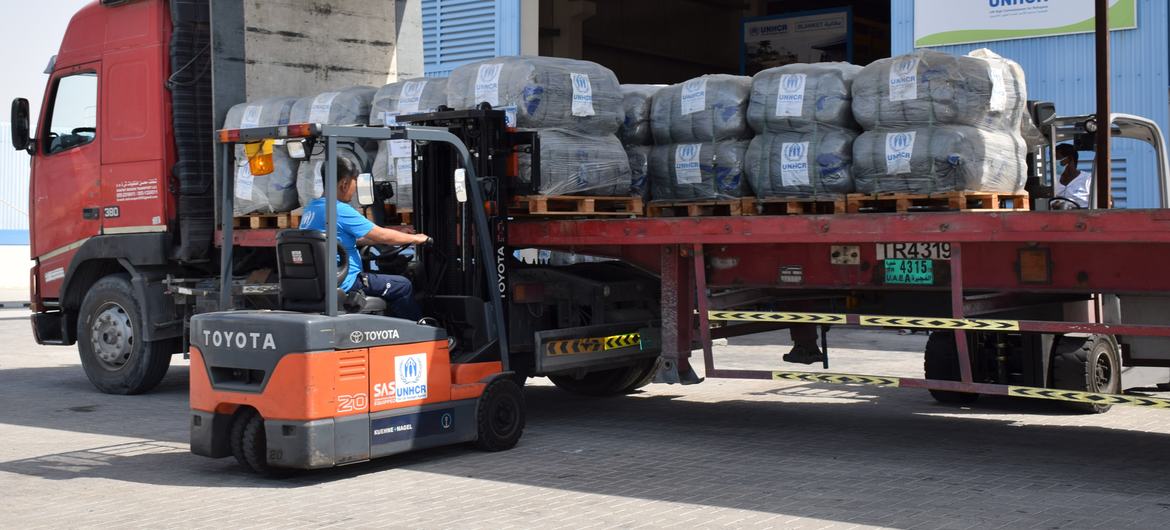
Since Russia launched its military offensive, humanitarian needs inside Ukraine have surged sharply due to the disruption of basic supplies and services. At the same time, in less than a week, more than 600,000 people have fled Ukraine.
The United Nations estimates that 12 million people inside Ukraine will need relief and protection, while more than 4 million Ukrainian refugees may need protection and assistance from neighboring countries in the coming months.
A USD 1.7 Billion Humanitarian Appeal
To respond to the rapidly surging humanitarian needs, the United Nations and its humanitarian partners launched two humanitarian response plans for Ukraine and surrounding countries on March 1.
Among them, to address the needs inside Ukraine, the United Nations issued an urgent appeal to all parties for USD 1.1 billion in order to assist 6 million people inside Ukraine in the first three months. The plan includes multipurpose cash assistance for the most vulnerable groups, food assistance, water and sanitation facilities, support for healthcare and education services, and housing assistance to rebuild damaged homes. The plan also aims to provide support to the authorities to maintain and establish transit and reception centers for the displaced and to prevent gender-based violence.
Another inter-agency regional refugee response plan addressing the situation in Ukraine initially requests USD 550.6 million from all parties to help refugees who have fled to Poland, the Republic of Moldova, Hungary, Romania and Slovakia, as well as other countries in the region, providing shelter, emergency relief items, cash assistance, and mental health and psychosocial support.
UN Secretary-General António Guterres said at a press conference that day that the people of Ukraine must be helped through this terrible time, "I urge you to respond to these life-saving appeals."
Secretary-General: UN Agencies Stay in Ukraine to Provide Services
Before the recent escalation of the military offensive, humanitarian agencies had already been providing assistance to 3 million people in eastern Ukraine. At present, UN agencies remain in Ukraine and are expanding their assistance plans throughout the country.
Guterres said that UN agencies and partners are now working around the clock, assessing humanitarian needs and scaling up assistance, especially for women, children, the elderly and persons with disabilities. "The United Nations and its partners are committed to supporting all affected people in accordance with the humanitarian principles of neutrality, impartiality, independence and humanity."
He said: "As we step up our efforts, it is vital that all humanitarian staff be safe and protected, that their freedom of movement be ensured and that they have unimpeded access to all affected people and communities. I call on all parties to fulfill their obligations under international humanitarian law."
At the same time, Guterres warned that the Ukraine crisis could have a serious impact on vulnerable groups around the world. Ukraine is an important source of grain globally. Disruption to the harvest could push up prices and aggravate global hunger.
He stated that there is now an urgent need to demonstrate global solidarity, not only by funding humanitarian assistance plans, but also by investing in peace. Because "the most effective humanitarian aid is to silence the guns."
He said: "I thank all countries that have taken initiatives to promote negotiations on the Ukraine issue. The United Nations stands ready to provide support. The soldiers must return to their barracks. The leaders must turn to diplomacy. I urge all those with influence to use their influence to end this senseless conflict."
UNHCR / IOM: Responding to Europe's Largest Refugee Crisis of This Century
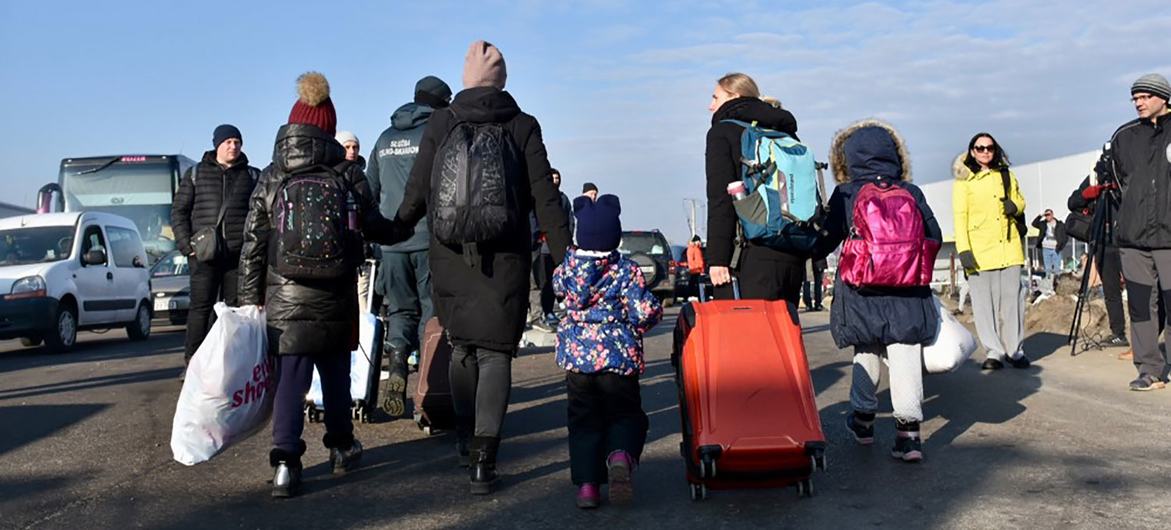
The latest data from the UN Refugee Agency (UNHCR) show that, due to the continuously deteriorating situation, more than 677,000 people have fled Ukraine. So far, all neighboring countries have opened their borders to refugees fleeing Ukraine. Most have fled to Poland, Hungary, Moldova, Romania and Slovakia, while some have fled to various other European countries. In addition, a considerable number have moved on to Russia. The authorities of these countries are taking on the responsibility for the registration, reception, accommodation and protection of these refugees.
UNHCR urges governments to continue to keep access to these territories open to all those fleeing, without any discrimination against any individual or group.
UN High Commissioner for Refugees Filippo Grandi said today that the conflict in Ukraine could become Europe's largest refugee crisis of this century.
He said: "While we have seen the tremendous solidarity and warmth shown by neighboring countries in receiving refugees, more support is needed to help and protect the newly arrived refugees."
UNHCR is stepping up its operations, urgently deploying more resources, staff and relief items in the region, while preparing to provide cash assistance as needed. UNHCR's child welfare and protection specialists are also ready to support national authorities.
Safa Msehli, spokesperson for the International Organization for Migration (IOM), also pointed out today that there are an estimated "470,000 third-country nationals in Ukraine," including a large number of overseas students and migrants working in the country.
Msehli said that in Moldova and Slovakia alone, at least 6,000 third-country nationals have arrived, and many remain stranded inside Ukraine.
She noted that some countries have asked UN agencies for assistance to help their citizens return to Africa, the Middle East and Asia.
The International Organization for Migration is coordinating with the relevant authorities to assist more than 50 Tunisian citizens who crossed the border into Moldova, relocating them to Romania before they take a charter flight home.
UNICEF: Stepping Up Assistance to Ukrainian Children
Catherine Russell, Executive Director of the United Nations Children's Fund (UNICEF), said today that the situation of children and families caught up in the Ukraine conflict is deteriorating by the minute, the fighting is closing in on civilians, and all 7.5 million children in Ukraine face heightened risks.
She said: "According to data verified by the Office of the High Commissioner for Human Rights, at least 13 children have been killed, and we expect this number to rise as the fighting continues. Many children have been injured. Even more children have been deeply traumatized by the violence around them. Hundreds of thousands of children are out of school."
Russell said that UNICEF and its partners are working 24 hours a day to meet the rapidly growing humanitarian needs.
At present, there are 140 staff working for UNICEF in Ukraine, and UNICEF is dispatching more people to meet the needs within the country. In eastern Ukraine, 9 UNICEF-supported mobile child protection teams are doing everything they can to provide children with psychosocial care, mental health support and protection services.
At the same time, in western Ukraine, large numbers of families, students and migrants are fleeing to neighboring countries such as Poland. According to reports, many children have been forced to separate from their families. UNICEF spokesperson James Elder said in an interview in western Ukraine, "We are seeing many fathers handing their children over to border guards in Poland."
He said: "At present, the focus of our support is on those heading to the border. We already have trucks arriving at the borders of Poland and Romania, providing emergency healthcare, sanitation facilities, education support and psychological support."
Since nearly half of the refugees are children, UNICEF is working closely with UNHCR to provide them with protection and assistance in receiving countries.
UNICEF today, at its New York headquarters, appealed for USD 276 million for children inside Ukraine, and requested an additional USD 73 million for the regional refugee response plan in neighboring countries.
WHO: Spare the Civilians
The World Health Organization is deeply concerned that hospitals, health workers and patients have become targets in Russia's "offensive," and stresses that civilians and civilian infrastructure are sacrosanct and inviolable.
WHO spokesperson Christian Lindmeier said: "We have received several unconfirmed reports of attacks on hospitals and health infrastructure, but only the attack on February 24 has been verified."
As Russia continues to advance its military offensive against Ukraine, from the morning of February 24 to midnight on February 28, the Office of the United Nations High Commissioner for Human Rights recorded 536 Ukrainian civilian casualties, of whom 136 civilians were killed, including 13 children. The OHCHR expressed deep concern about this.
WFP: Launching Emergency Operations
The World Food Programme said on Tuesday that it would launch a three-month emergency operation in Ukraine to provide food assistance to people fleeing the conflict.
WFP is scaling up to help as many as 3.1 million civilians through the use of cash-based transfers and, where necessary, the distribution of food.
WFP staff in Kyiv said that food supplies are dwindling and grocery store shelves are almost empty. The agency plans to provide assistance by distributing food, multipurpose cash and food vouchers that can be used in designated stores.
A first batch of 400 tonnes of immediate response rations is being transported from Türkiye to the border crossings of Romania and Poland with Ukraine. Of this, 200 tonnes of canned food and ready-to-eat meals are expected to arrive at distribution points by the end of this week.
UNFPA: Protecting the Health and Dignity of Ukrainian Women and Girls
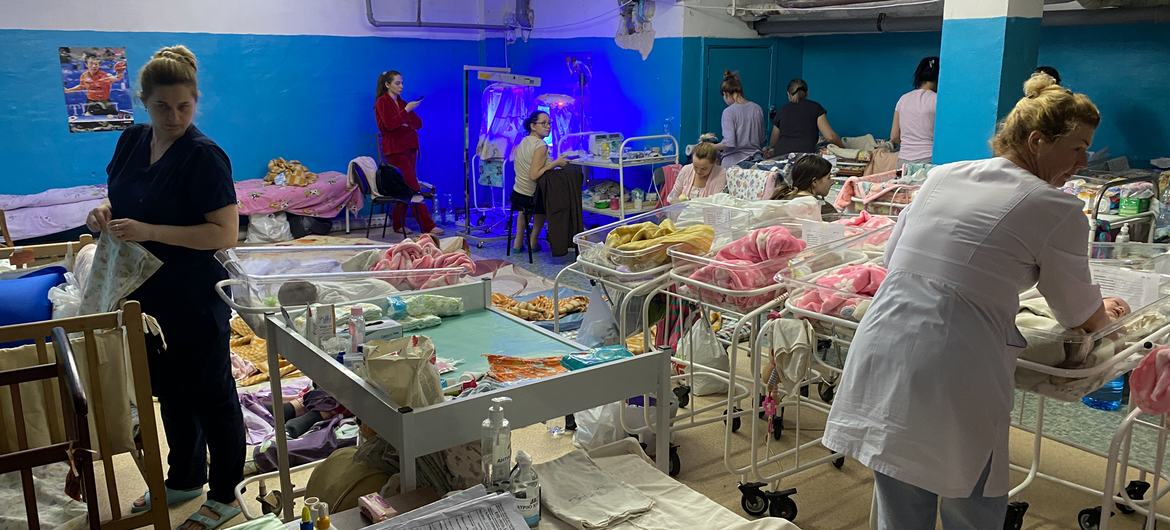
The United Nations Population Fund (UNFPA) said that over the past few days, more than 80,000 refugees have fled the Ukraine conflict and crossed the border into Moldova. Most of the refugees are women with children and the elderly, who are often the most vulnerable in situations of conflict and displacement.
It is estimated that there are 265,000 pregnant women in Ukraine, of whom about 80,000 are expected to give birth in the next three months. UNFPA is scaling up life-saving services to ensure that all women and girls are protected from violence and that babies are born safely under the highest level of care.
In addition, the agency has also distributed dignity kits containing basic sanitary supplies and menstrual pads to help women and girls maintain their dignity.
Source: Pacific Rim Institute for Development and Education (P.R.I.D.E.)
