

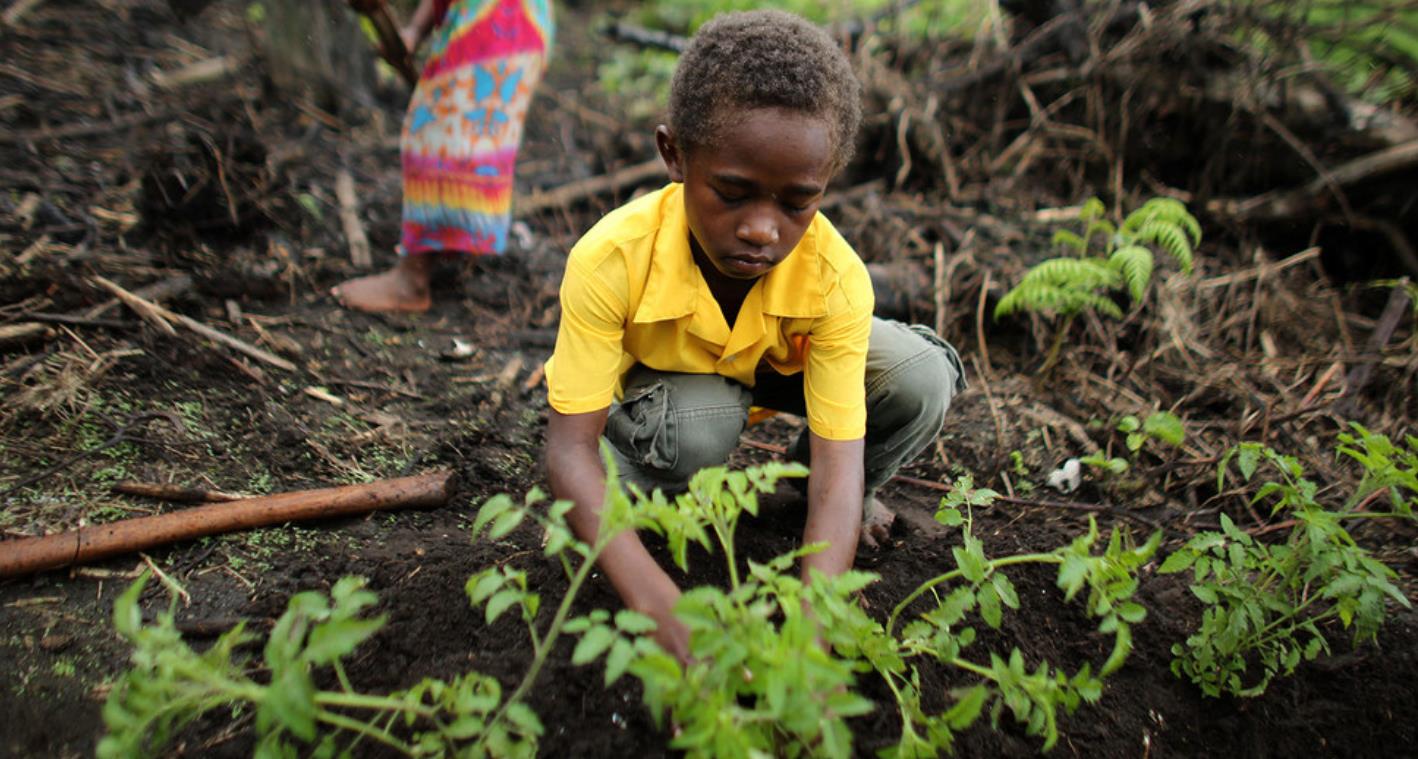
UN Secretary-General Guterres told government delegates and youth leaders attending the pre-conference meeting of the UN Climate Change Conference in Milan, Italy, today that the climate crisis has already destroyed people’s lives and livelihoods, and that it is crucial for all countries, all sectors, and young people in particular to drive global action.
Delegates from countries around the world and hundreds of young people took part in various events. This is a prelude to the 26th Conference of the Parties to the UN Framework Convention on Climate Change, to be held in Glasgow, Scotland, in November.
Urging all countries to step up their efforts
Secretary-General Guterres delivered an address to government ministers.
He pointed out that, based on the emissions-reduction targets currently set by countries—their “nationally determined contributions”—global temperatures will rise 2.7 degrees Celsius above pre-industrial levels, which would be catastrophic.
He said: “We need more ambition now.”
He stressed that the 1.5-degree target can only be achieved if all G20 countries, which account for 80% of global emissions, commit to more decisive action in new or updated nationally determined contributions.
Guterres said that the principle of common but differentiated responsibilities in light of national circumstances is a pillar of the Paris Agreement. “But all leaders must recognize that we are in a climate emergency. Developed economies need to take the lead, but all countries can play a key role.”
Climate finance
On the issue of climate finance, he pointed out that developed countries have a responsibility to increase their respective pledges and to fulfill their collective commitment to deliver 100 billion US dollars per year. According to the OECD, there is still a gap of 20 billion US dollars.
Guterres said: “This 100 billion US dollars is only a down payment on the funds needed to finance mitigation and adaptation in developing countries.”
Supporting adaptation to climate change
The Paris Agreement provides for more financial resources to be made available, achieving a balance between adaptation to and mitigation of climate change.
Guterres said, “Six years on, we are still far from there.” Adaptation remains the neglected half of the climate equation, accounting for only 25% of climate finance. Worse still, adaptation accounts for just 0.1% of private finance.
He once again called on donors and multilateral development banks to allocate at least 50% of climate support to adaptation and resilience.
He said that adaptation needs are growing every year. Developing countries need 70 billion US dollars per year for adaptation, and by around 2030 this figure could quadruple to 300 billion US dollars per year.
Guterres stressed: “Failure to deliver would mean massive loss of lives and livelihoods.”
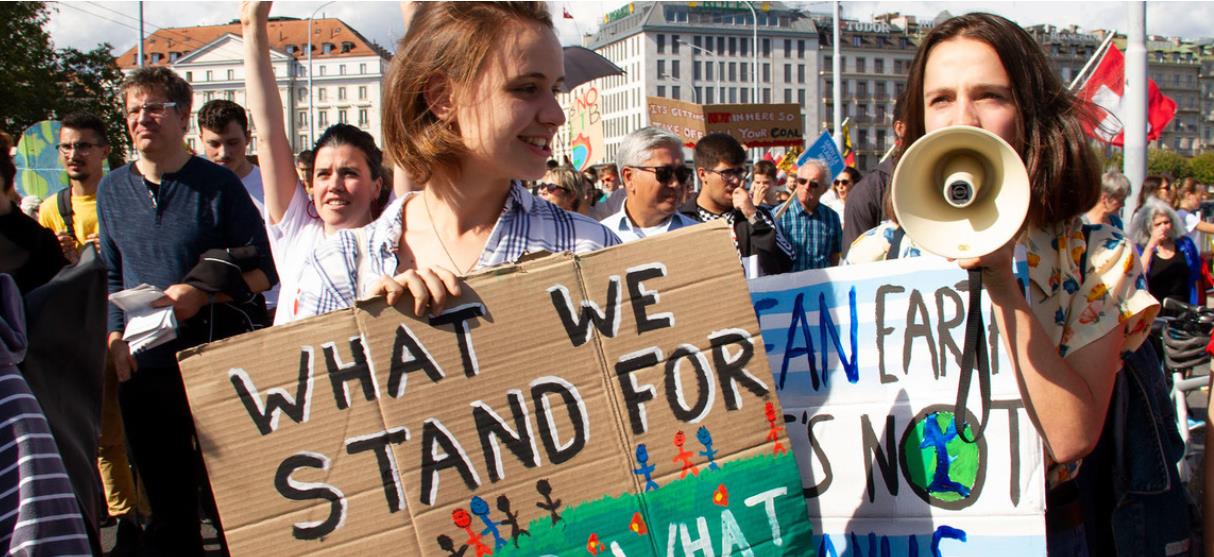
“Code red for humanity”
Guterres delivered a special video message to a youth event held that day. He said, “Young people have always been at the forefront of putting forward positive solutions, advocating for climate justice, and holding leaders to account. We need young people everywhere to keep making your voices heard.”
The Secretary-General described the climate emergency as “code red for humanity,” because the poorest and most vulnerable people are already being hit the hardest.
He said: “The window of opportunity to prevent the worst impacts of the climate crisis is closing fast. We know what needs to be done, and we have the tools to do it.”
Delivering on commitments
Guterres urged young climate leaders to keep speaking out loudly, “to achieve a breakthrough in building resilience and to ensure that at least 50% of climate support funding goes to adaptation, in order to protect lives and livelihoods.”
He outlined why young people’s voices are needed now, including to get developed countries to finally honor their decade-old commitment to provide 100 billion US dollars per year in climate finance to developing countries.
At the same time, governments, businesses, and investors are still failing to reduce emissions in line with the Paris Agreement’s goal of limiting warming to 1.5 degrees—another area for young people to champion.
This goal means that countries must commit to achieving net-zero greenhouse gas emissions by the middle of this century and set out clear plans to get there.
A powerful example
Guterres praised the Italian government, which co-chairs this Climate Conference together with the United Kingdom, for “providing this global stage for young people so that they can engage directly with decision-makers.”
He thanked young people for putting forward ideas and solutions ahead of the UN Climate Conference.
He said: “Your unity and your demands for action set a powerful example. We need national leaders to follow your example and ensure that we achieve the ambition and outcomes we need at the Climate Conference and beyond.”
Source: Pacific Rim Institute for Development and Education (P.R.I.D.E.)
